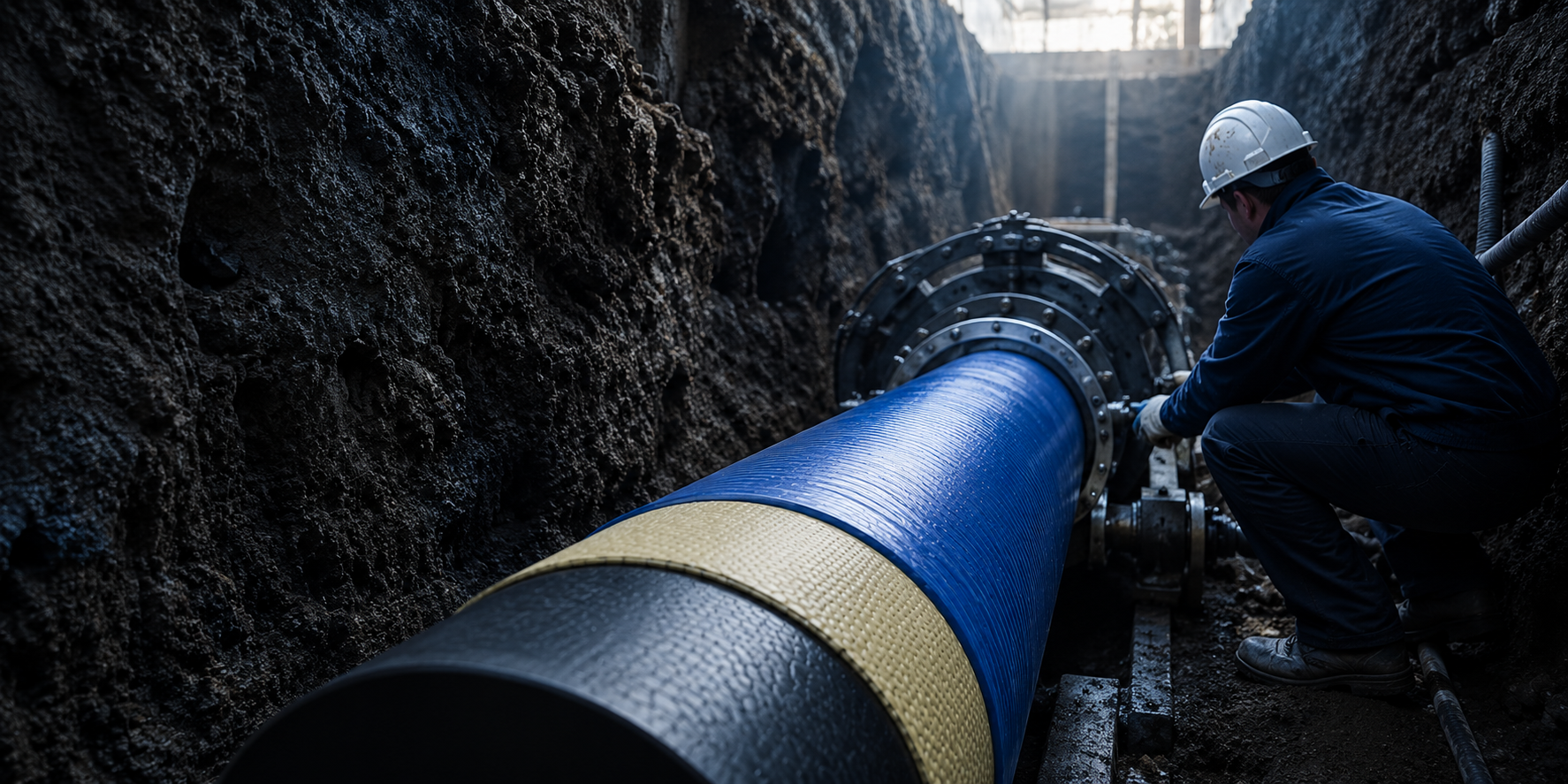
Pipeline Rehabilitation
Trenchless rehabilitation for aging pressure pipelines
A self-supporting trenchless liner system designed to rehabilitate existing pressure pipelines with minimal excavation, reduced shutdown, and long-term service life extension.
Overview
Solution overview
A self-supporting trenchless liner system designed to rehabilitate existing pressure pipelines with minimal excavation, reduced shutdown, and long-term service life extension.
Key Applications
- Water Transmission
- Gas Pipeline
- Oil Pipeline
- Industrial Pressure Pipeline
- Utility Pipeline
- Aging Infrastructure
Strengths
Why this solution matters
Minimal excavation compared with conventional open-cut replacement
Self-supporting liner structure for pressure pipeline rehabilitation
Long installation length for reduced access pit requirements
Applicable to water, gas, oil, and industrial utility pipelines
Capable of handling bends and complex pipeline alignments
Reduced noise, dust, waste, and surface disruption during installation
Technical Features
Self-supporting high-pressure composite liner technology
This trenchless rehabilitation method restores aging pressure pipelines by inserting a structural liner inside the existing pipe. It is designed to reduce excavation, shutdown duration, surface disruption, and civil work impact.
Service Life
50+ years
Designed to extend the long-term service life of existing pipelines.
Max Working Pressure
Up to 82 bar
High-pressure composite liner structure for pressure pipeline applications.
Diameter Range
DN150-DN1200
Applicable from medium-size to large-diameter pressure pipelines.
Installation Length
Up to 2,500m
Long installation length to reduce the number of access points.
Quick Installation
10m/min
Fast insertion speed to reduce shutdown and site work duration.
Installation Angle
90 degree bends
Suitable for pipelines with bends and complex alignments.
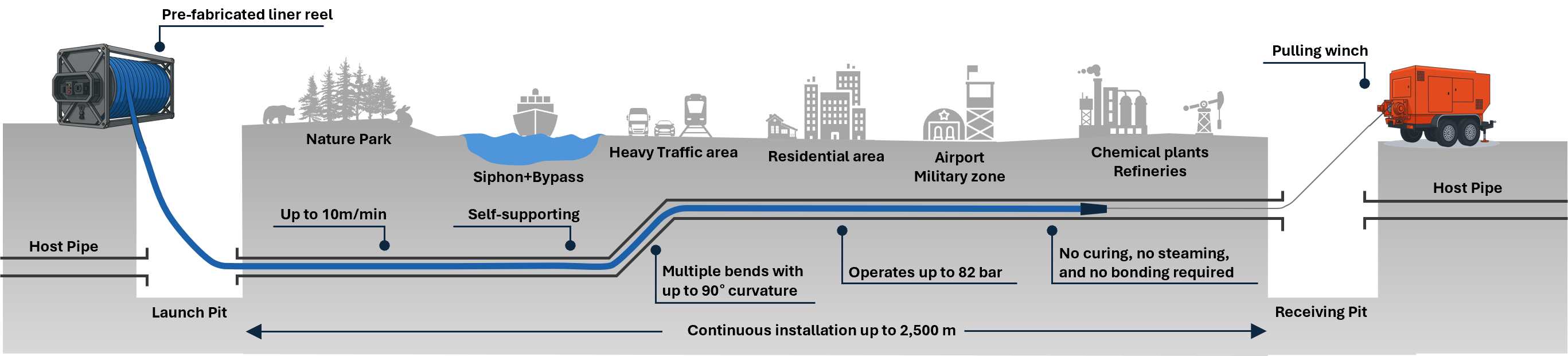
Trenchless Installation Concept
Internal liner insertion with minimized excavation
Access points are prepared at the start and end of the rehabilitation section, and the liner is inserted through the existing pipeline. This approach is suitable where roads, rivers, railways, and surface structures must be protected from major disruption.
Method Comparison
Reducing site impact compared with open-cut replacement
Trenchless pipeline rehabilitation helps reduce excavation scope, civil work cost, waste, noise, dust, and surface disruption by utilizing the existing pipeline as much as possible.
Conventional Method
Open-cut Replacement
Existing pipelines are removed and replaced through full-section excavation, which can increase civil work, disposal, and site disruption.
Trenchless Method
Trenchless Rehabilitation
Access points are prepared mainly at the start and end of the section, and a structural liner is inserted inside the existing pipeline.
Review Item
Excavation
Open-cut
Full-section excavation
Trenchless
Access pits only
Review Item
Civil Work Cost
Open-cut
High
Trenchless
Lower
Review Item
Existing Pipeline
Open-cut
Removal and disposal
Trenchless
Retained with internal liner insertion
Review Item
Service Media
Open-cut
Water, gas, oil
Trenchless
Water, gas, oil
Review Item
Surface Structures
Open-cut
Higher construction complexity
Trenchless
Minimal impact
Review Item
Environmental Impact
Open-cut
Noise, dust, and waste
Trenchless
Reduced impact
Project Inquiry
Need technical sourcing support for Pipeline Rehabilitation?
Contact IN-TECH to discuss product availability, project requirements, technical coordination, and proposal support.
Send Inquiry